
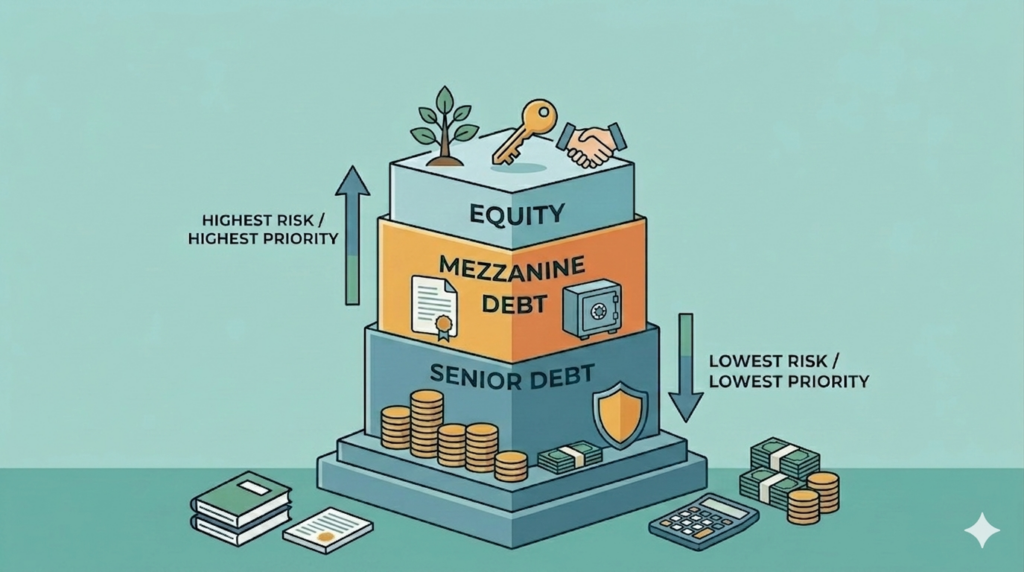
Capital stack means the different layers of money used to finance a project. In EB-5, understanding the capital stack is important because it shows where EB-5 money sits compared with other funding sources.
A real estate development project, for example, may include senior bank debt, EB-5 capital, developer equity, bridge financing, mezzanine loans, tax credits, or other investor funds. Together, these sources form the capital stack.
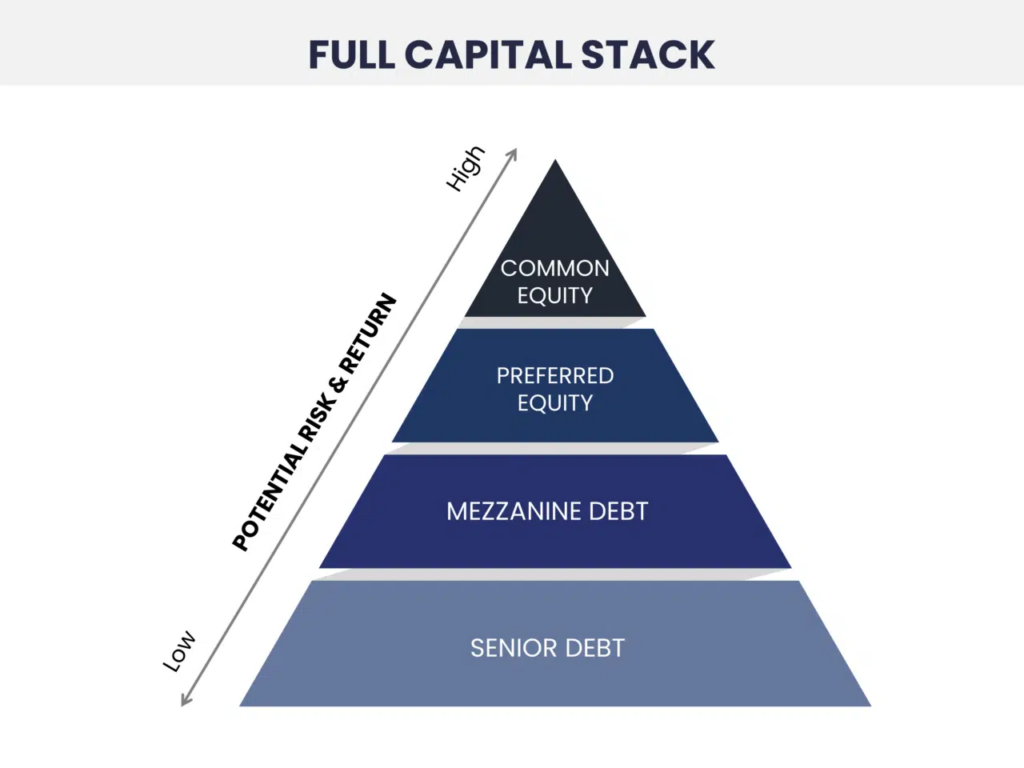
The order of the capital stack matters. Senior lenders or debt (sometimes referred to as the “Construction Loan”) usually have the strongest repayment position and may be secured by project assets. Equity investors usually take more risk and are paid after debt holders. EB-5 investors are often placed somewhere in between, depending on the structure.
For EB-5 investors, the capital stack can affect both risk and repayment. If EB-5 capital is structured as a loan from the New Commercial Enterprise to the Job-Creating Entity, investors should understand the loan terms, collateral, maturity date, interest rate, and repayment source. If EB-5 capital is structured as equity, investors should understand ownership rights, profit distribution, and exit conditions.
A project with many layers of financing is not automatically bad. Large projects often require multiple funding sources. But investors should ask whether the full financing plan is realistic. If a project still depends on future loans, future sales, or uncertain public funding, there may be completion risk.
Important questions include: How much developer equity is already invested and is it real, contributed, or deferred? Is senior financing committed? What percentage of the project is funded by EB-5? What happens if costs increase? Who gets repaid before EB-5 investors? Can the projet insert additional lenders in a priority repayment position AHEAD of the EB-5 investors, even after the EB-5 capital is raised and deployed to the project?
Capital stack analysis helps investors avoid looking only at marketing materials. It shows the financial structure behind the project.