
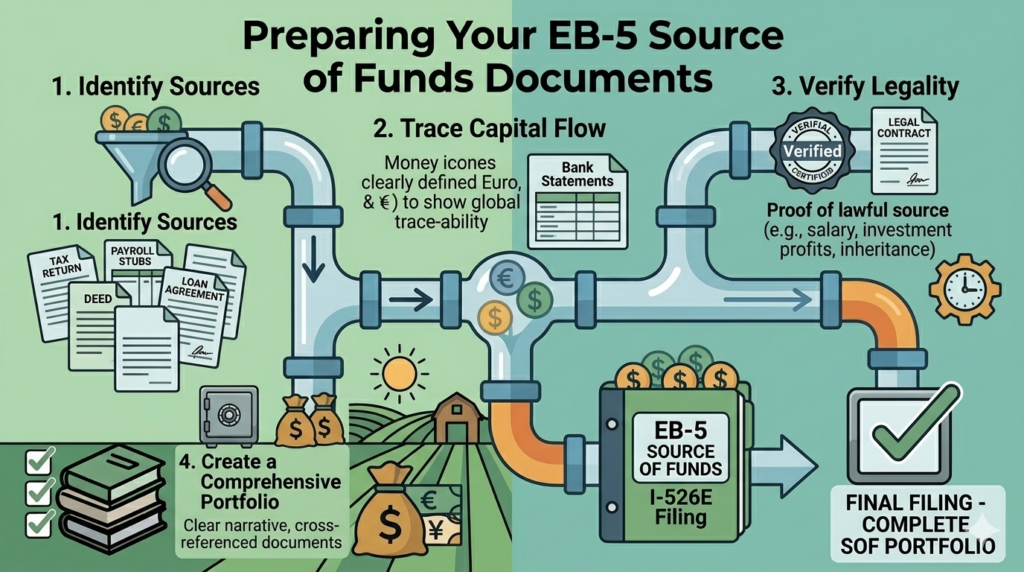
Source of Funds vs Path of Funds
Investors often hear both terms during the EB-5 process.
Source of funds explains where the capital originally came from.
Path of funds explains how the capital moved from the original source to the EB-5 investment.
For example, an investor may sell a property, receive the proceeds in one bank account, transfer the funds to a spouse, move the money through another country, and finally wire it to the EB-5 project account. The property sale is the source. The series of bank transfers is the path.
Both parts need to be clear. Even when the source is lawful, missing bank records or unexplained transfers may create questions. A strong EB-5 filing should allow the person reviewing the case to follow the money from beginning to end without having to guess what happened.
Check on this Article to know about type of Source of Funds :
Start With the Most Documentable Funds
One of the most practical lessons I have learned is this: do not automatically use the money that is easiest to transfer. Use the money that is easiest to document.
An investor may have funds available in several accounts, but some sources may be much cleaner than others.
For example, cash accumulated through many small transfers may be difficult to explain. Recently received property sale proceeds with complete records may be easier. A family loan may be available immediately, but salary savings with clear tax and banking evidence may create a stronger filing.
Before moving money, investors should review the possible funding sources with their immigration attorney. Transferring first and explaining later can create unnecessary complications.
Documents Should Tell One Clear Story
A strong source-of-funds package is not simply a large collection of bank statements and certificates.
The documents should tell a clear and logical story:
- How the investor or donor earned or acquired the money;
- Where the money was initially held;
- How it moved between accounts;
- Why any third parties were involved;
- How it reached the EB-5 project; and
- How any administrative fee was paid.
Each transfer should match the dates and amounts shown in the supporting records.
When account holders, currencies, or jurisdictions change, the explanation should be especially clear. Currency exchange records, transfer receipts, remittance documents, and intermediary account statements may all be necessary.
Common Problems Investors Should Avoid
One common mistake is waiting until the project has been selected before beginning source-of-funds preparation. By that time, the investor may feel pressured to transfer funds quickly.
Another mistake is making multiple transfers between relatives without keeping complete records. Even when the family relationship is genuine, every movement of money may need to be explained.
Investors should also avoid relying heavily on cash transactions, undocumented loans, unexplained deposits, or funds belonging to third parties.
Finally, documents should be consistent. Names, dates, account numbers, transaction amounts, company ownership, and property details should match across the filing. Small inconsistencies can create larger questions during USCIS review.
A Practical Preparation Checklist
Before filing, investors should organize:
- Personal identification and family records;
- Employment and salary evidence;
- Personal and business tax returns;
- Bank statements covering the relevant period;
- Company ownership and financial records;
- Property purchase and sale documents;
- Gift, loan, or inheritance documents;
- Currency exchange and remittance records;
- Evidence of the EB-5 investment transfer; and
- Evidence showing payment of project-related fees.
Not every investor will need every document. The exact package depends on the funding source and personal history.
Final Thoughts
Source-of-funds preparation can look overwhelming at first, especially for investors with businesses, property, family transfers, or assets in several countries. However, the process becomes much easier when the financial story is planned before the money moves.
After helping many families through EB-5, I usually give investors one simple piece of advice: start early and keep every document.
Your source of funds does not need to be simple, but it does need to be lawful, traceable, and clearly explained. A well-organized source-of-funds package can reduce unnecessary questions and create a stronger foundation for the entire EB-5 petition.