
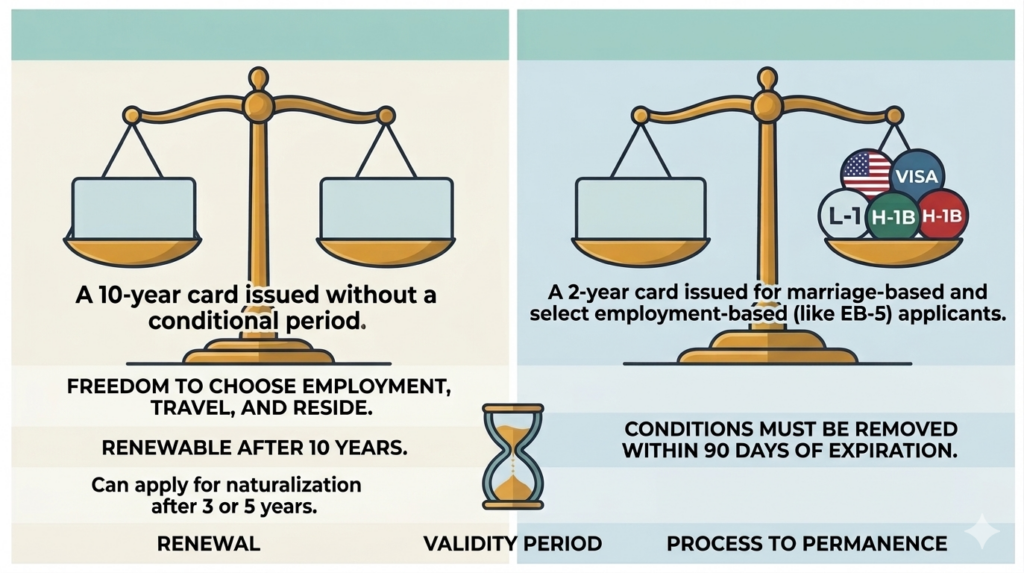
In EB-5, investors often hear two terms: conditional green card and permanent green card. Both provide lawful permanent resident status, but they are not the same.
A conditional green card is usually the first green card an EB-5 investor receives after approval of the immigrant visa or adjustment of status. It is valid for two years. During this period, the investor and eligible family members can live, study, and work in the United States as lawful permanent residents.
However, the word “conditional” is important. It means the investor must later prove that the EB-5 requirements were actually satisfied. The investor must file Form I-829 before the conditional green card expires. This petition asks USCIS to remove the conditions on residence.
At the I-829 stage, USCIS looks at whether the required investment was made and sustained, and whether the required job creation was achieved. The EB-5 program generally requires the creation or preservation of 10 full-time jobs for qualified U.S. workers.
A permanent green card, in the EB-5 context, means the conditions have been removed. After I-829 approval, the investor becomes a permanent resident without the two-year conditional limit. The card itself still has an expiration date for document renewal purposes, but the immigration status is no longer conditional.
The practical difference is simple: the conditional green card is the “prove it later” stage; the permanent green card is the stage after USCIS accepts that the EB-5 investment and job creation requirements have been met.
Investors should not ignore the I-829 stage. Choosing a project only based on marketing material or short-term approval history is not enough. A strong EB-5 project should be evaluated based on whether it can support both I-526E approval and I-829 approval.